
Information Slump
Robert Rauschenberg: Fabric Works of the 1970s at the Menil Collection

Car, airplane, car, hotel, car, art museum. That was my path to the Robert Rauschenberg exhibition in Houston and the travel-induced fatigue heightened my awareness of the various containers I found myself inside of; objects, symbols, images, words…they all flew by, too fast and too much to comprehend. Though Rauschenberg’s fabric works at the Menil Collection were created fifty years ago, they prompted these thoughts about the speed of modern life and the materials that direct our bodies throughout daily activities. Quieter and more poetic, sometimes shrouded with a soft tint of grief or a yearning for the naive safety of childhood, his work with fabric will linger long after you encounter it.
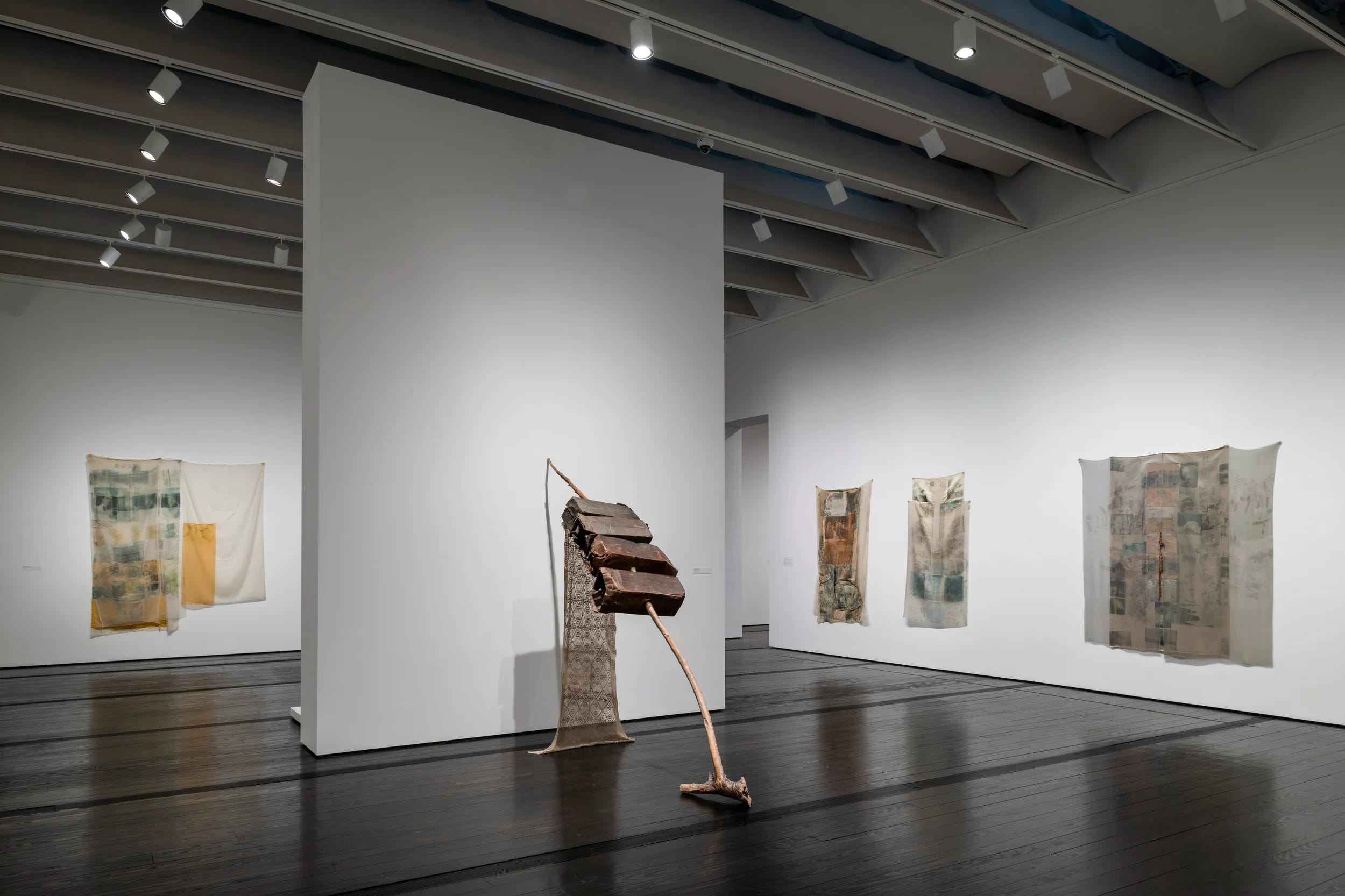
Rauschenberg created most of these works during the era of the first televised war: Vietnam, of which he was also a veteran and strong dissenter. Footage of the US military using napalm and Agent Orange to scorch the land and people of Vietnam broadcasted into America’s comfortable domestic spaces, forcing the public to confront the violent truth of political control. Making work as an artist during the early and mid 1970s meant creating against a backdrop of uniquely horrifying imagery and confronting larger and faster amounts of information than ever before.
Rauschenberg didn’t try to make logical sense of it all, but rather laid bare the collective grief and empty aftermath of destruction into tangible layers. Despite some of the vivid colors in the Jammers series, these works aren’t cheerful; they barely hang on, beholden to gravity and the weight of too much. A passing thorn would tear the diaphanous silks to shreds.
My eyes have been losing focus lately. I can feel my eyeballs scatter across the screen, frantically looking for a something honest and softer to hold onto. It doesn’t happen when I read a book, or gaze upward into the lacework created by snow-laden trees, or examine a particularly unique woodgrain, or admire my nephew’s Kewpie Doll grin.
We are moving faster in many ways, but information remains indecipherable. Perception can’t hold up to the blurry streams of narratives, data, fabrications, and widespread violence. You are not to blame if it all coalesces into monotonous, at times monstrous, white noise.
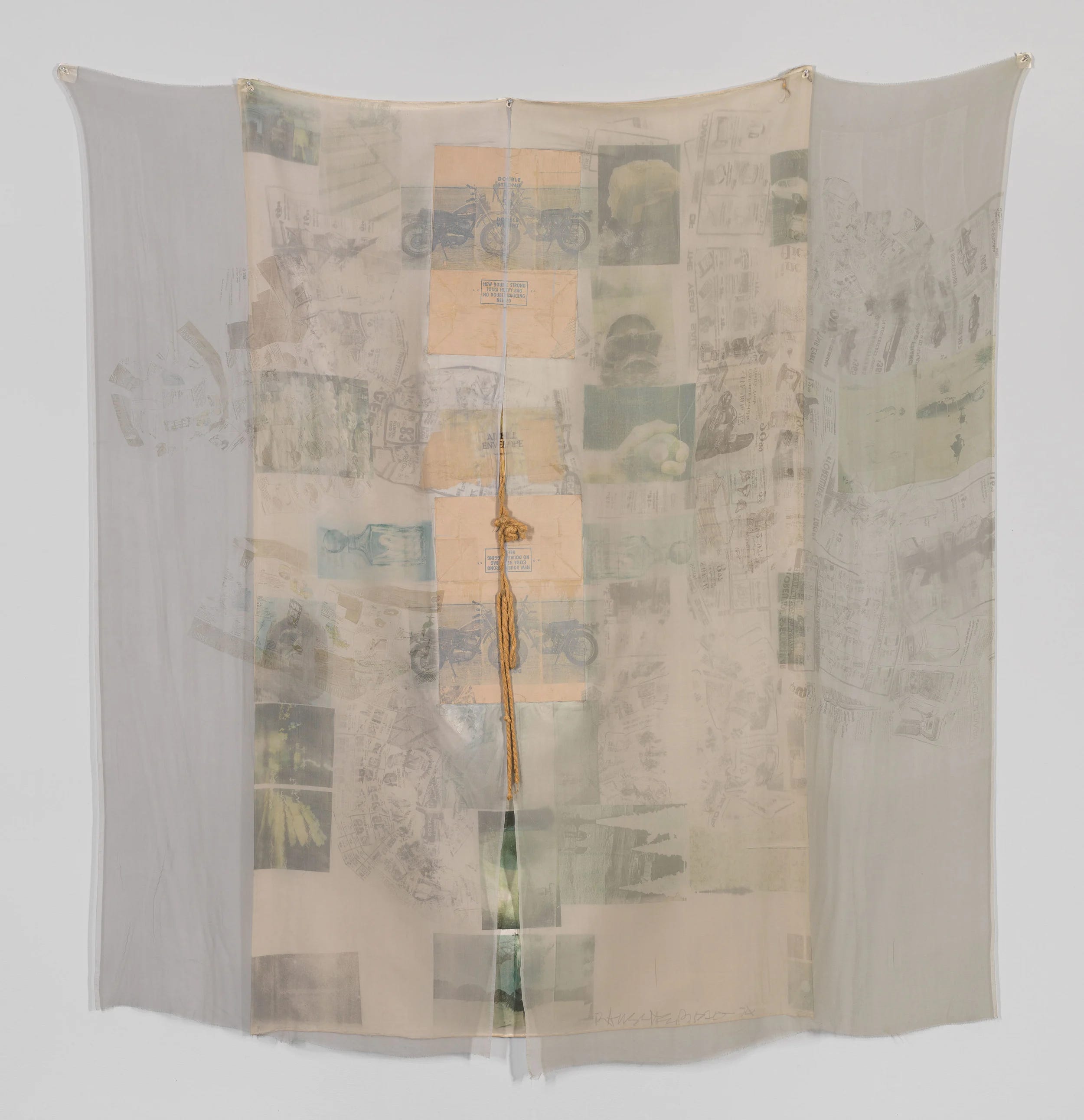
The Hoarfrost series uses thin fabrics and layered image transfers to construct this sensation of fogged vision, as topical now as it was in 1974. Sybil exemplifies the series’ frustrating beauty; it withholds a part of its information behind a grey shroud. A knotted and frayed rope dangles from the center like a dejected stage curtain tassel. It resists any attempts to decipher meaning from the imagery and text, a static specter.
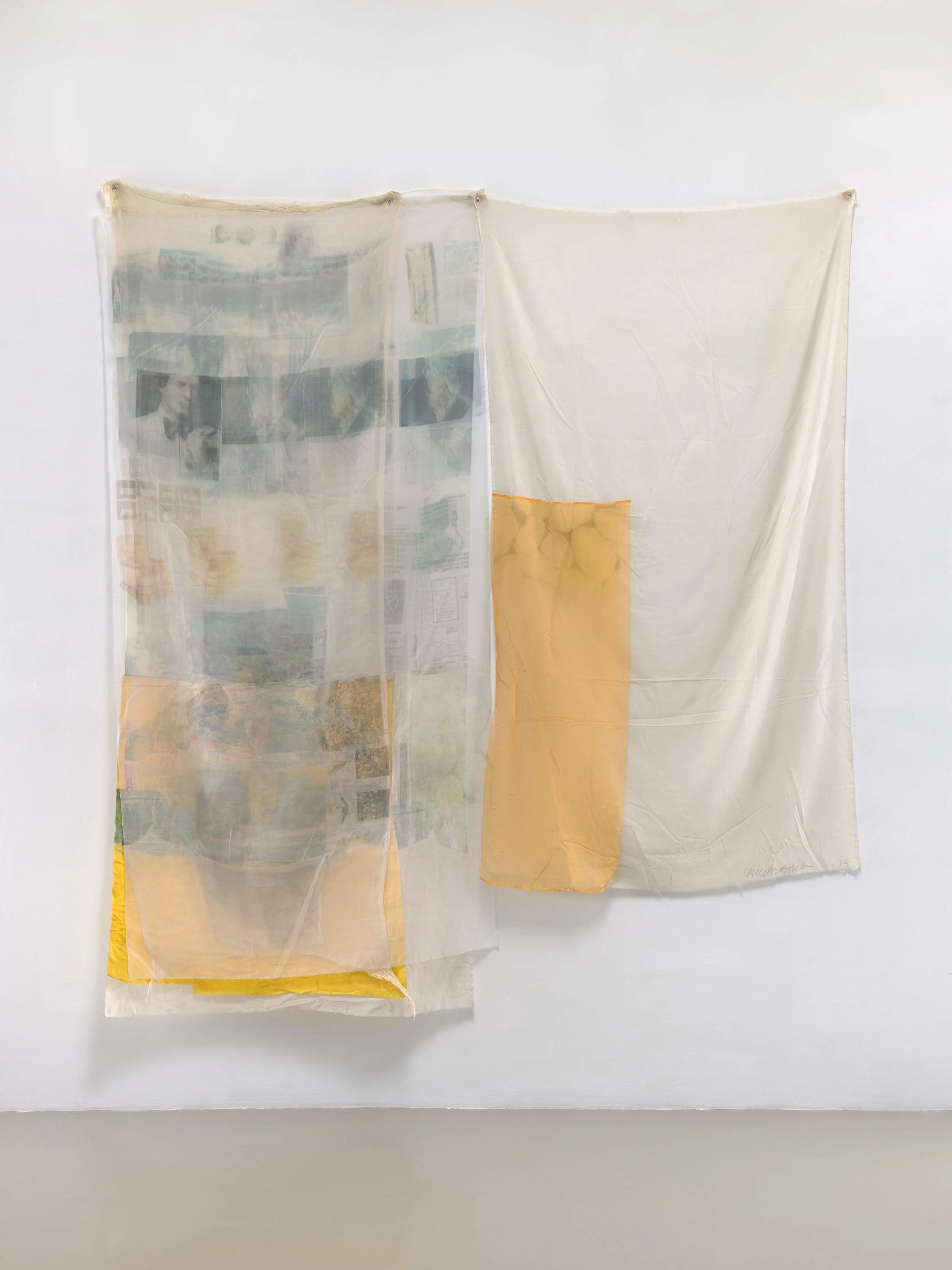
Obfuscated color also plays a large role in this series. Brighter swaths of fabric hide beneath layers of foggy drapery. Pale chiffons fade into one another, as if the sun has slowly quenched its thirst with their former hues.
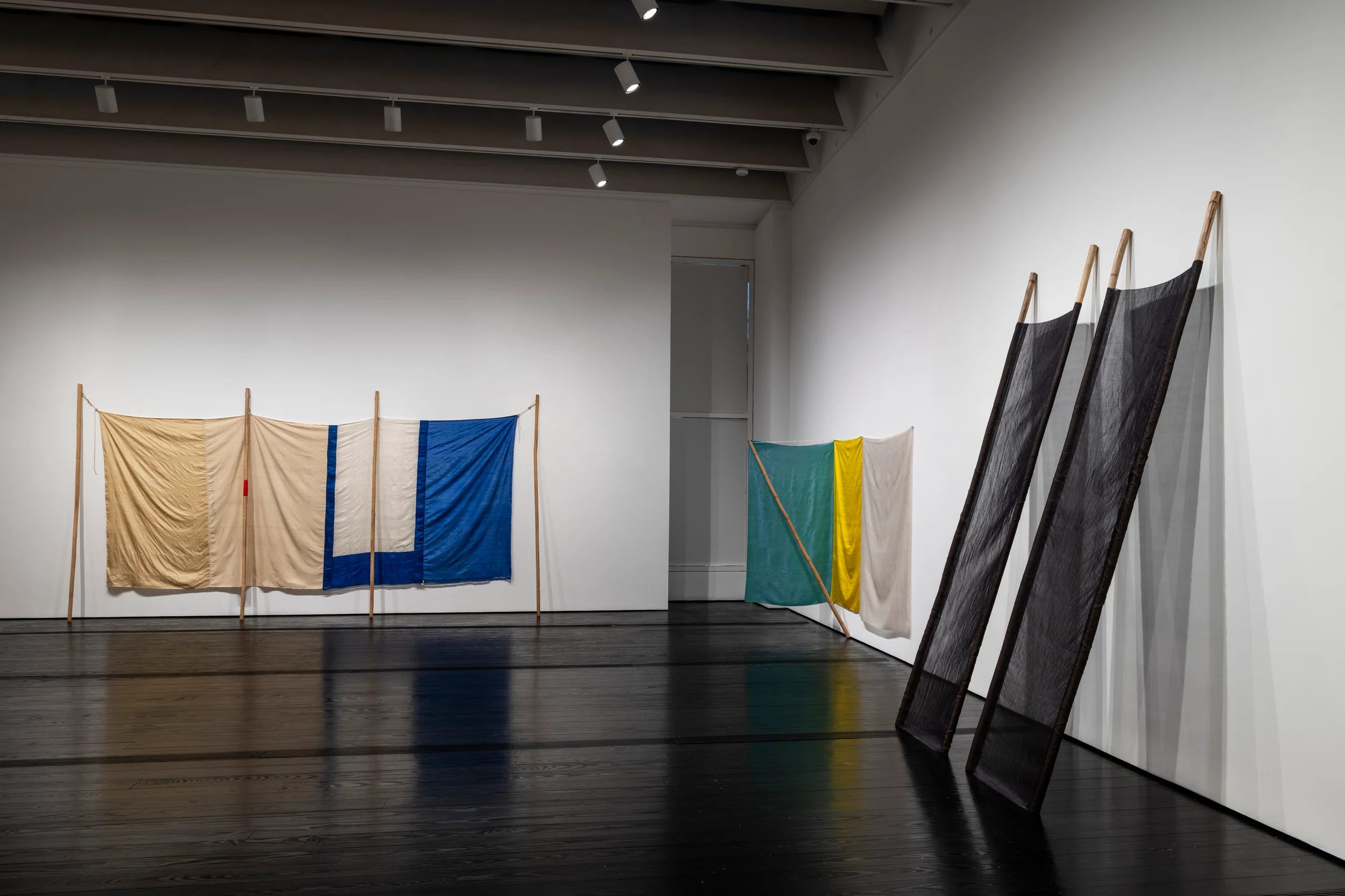
The Jammers series brings the shadow-play into three dimensions and the fabric remains unprinted. Bamboo poles and string suspend the silks into distilled Renaissance-esque abstractions. Provisionally perched against the wall like impromptu sale banners in the making, shelters, or tools for motion, the works in this series have always intrigued me because they possess such changeable energy.
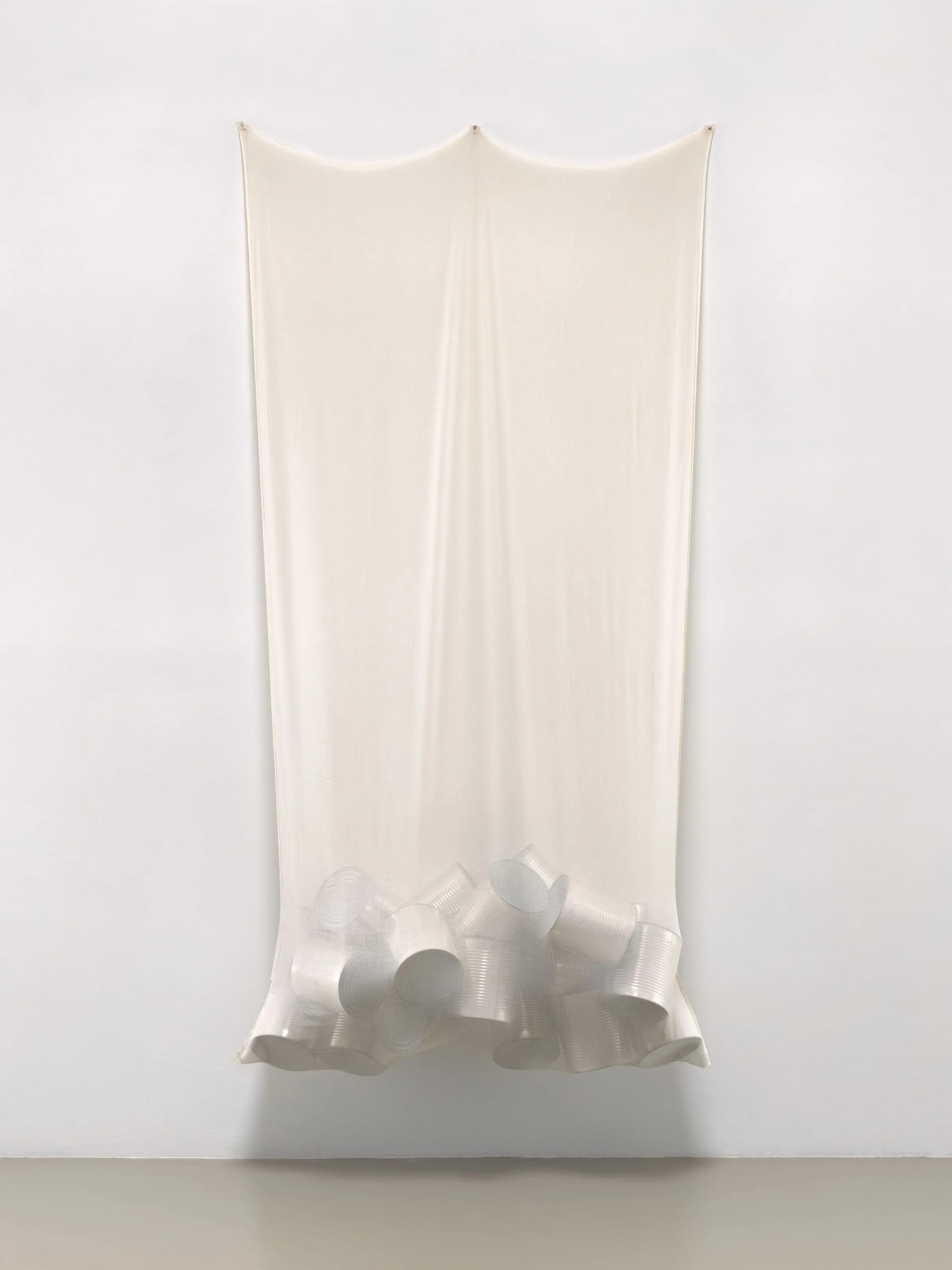
Coin, consisting of a fabric rectangle filled with empty tin cans, sags on the wall with a humorous, haunting, and inexplicably holy presence, not dissimilar to the Robert Gober tombstones. Any labels on the cans have been removed and all contents have been consumed. I imagine Coin in motion. It would clank wonderfully as an inanimate partner in a modern dance number.
Rauschenberg’s fabric works have remained frequent ghosts in my studio since his 2017 MoMA retrospective. Restraint is overvalued (and overused as a compliment) in modern art and I usually prefer when artists practice the opposite, following their obsessions to the messy end, but in this case, Rauschenberg’s light approach to material and airy compositions feel restrained in an expressive way, like when a Major Feeling that cannot be put into words presses on the heart and you start using everything around you to communicate it.
Peace,
Paloma
P.S. The exhibition catalog is extremely well done and a materially delightful reading experience. Translucent layers of paper interspersed throughout the pages create a similar layering effect to his works.
Beautiful meditation on how Rauschenberg captured information overload decades before it became inescapable. The point about those fabric layers witholding information behind grey shrouds is really intresting - kinda makes me think we've gotten so used to incomplete understanding that we just scroll past what we cant grasp. I had a similar moment in a museum last summer where I couldn't focus on anything. Maybe the fragility of those silks suggests clarity itself has become impossibly delicate.
Fantastic review !!! I felt present and immersed in the exhibition